Hurricane Categories Vs. Roof Damage
Hurricane · Jul 4, 2026
Hurricane Categories Vs. Roof Damage
Hurricane categories can bring mayhem and destruction. Discover how each storm category causes roof damage and how to prepare for them.
Every year, hurricane season brings uncertainty for homeowners across Florida. Strong winds, heavy rain, flying debris, and flooding can cause severe damage in just a few hours. Many property owners discover too late that they do not fully understand how hurricane categories relate to potential roof damage. Learning how each storm category affects roofing systems can help you prepare your home, protect your investment, and respond quickly when severe weather strikes.
New Image Roofing Florida gathered information about hurricane categories and their impact on residential roofing systems. Understanding potential damage associated with each hurricane classification allows homeowners to make informed decisions regarding inspections, maintenance, repairs, and insurance claims. This guide explains hurricane categories, common types of storm damage, steps to submit successful insurance claims, and ways New Image Roofing Florida helps homeowners recover after severe weather events.
Key Takeaways for Hurricane Categories Vs. Roof Damage
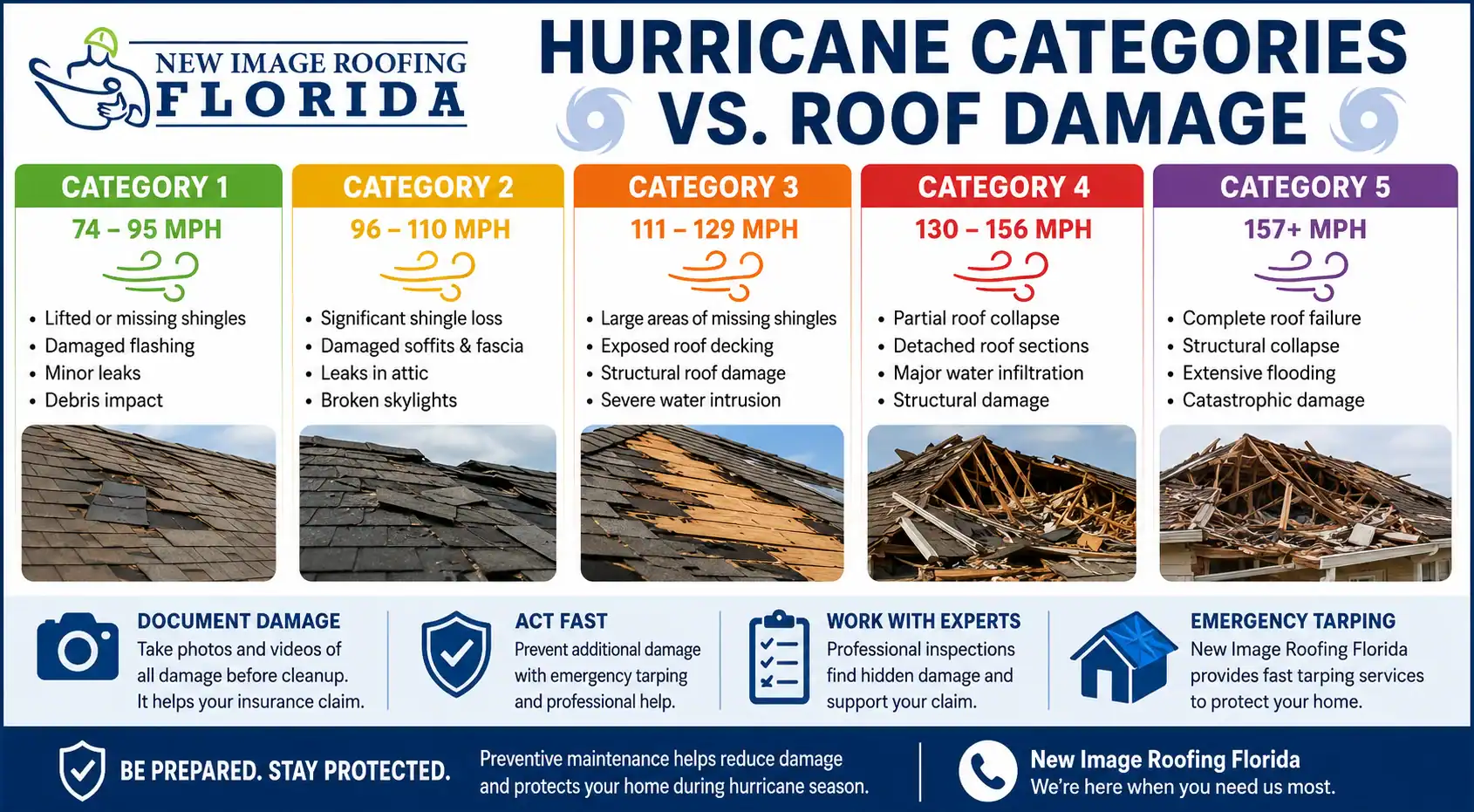
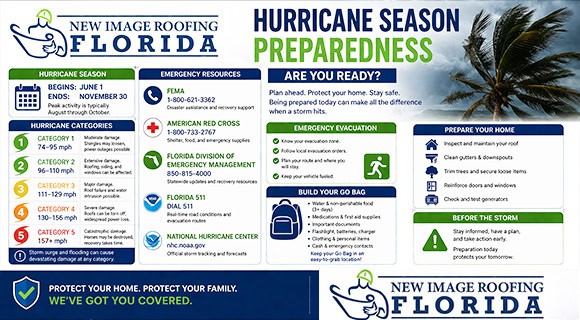
Understanding the different storm categories helps homeowners assess potential damage levels. Hurricanes are classified using the Saffir-Simpson scale, which ranks storms from Category 1 through Category 5 based on sustained wind speeds. Each category presents increasing levels of danger (lower category storms can cause significant damage) when combined with flooding or storm surge.
Category 1 hurricanes produce sustained winds ranging from 74 to 95 mph. Although considered the lowest hurricane classification, these storms can still damage roofing materials. Missing shingles, damaged flashing, loose ridge caps, clogged gutters, and minor water intrusion are common issues. Older roofs often experience more significant problems because materials may already be weakened from age and weather exposure.
Category 2 hurricanes generate winds between 96 and 110 mph. At this level, roofing systems face increased stress. Asphalt shingles may become detached, metal roofing panels can loosen, and water infiltration becomes more likely. Flying debris can puncture roofing materials and damage exterior components such as gutters, soffits, and fascia boards.
Category 3 hurricanes are considered major hurricanes and produce winds between 111 and 129 mph. Structural damage becomes a serious concern. Large sections of roofing materials may detach from a home. Roof decking can become exposed, allowing significant water penetration. Tree limbs and airborne debris frequently create openings that lead to interior damage.
Category 4 hurricanes generate winds ranging from 130 to 156 mph. Severe roof failure becomes increasingly common. Entire roofing sections may be removed, exposing attic spaces and interior rooms. Structural framing can experience stress, and widespread water intrusion often damages insulation, drywall, electrical systems, and personal belongings.
Category 5 hurricanes exceed 157 mph sustained winds. These storms create catastrophic damage. Complete roof loss is possible, along with extensive structural destruction. Homes that remain standing often require substantial reconstruction due to severe water infiltration and debris impacts.
Beyond roofing concerns, hurricanes can damage windows, siding, doors, landscaping, fences, garages, HVAC equipment, and outdoor structures. Water entering through compromised roofing systems can lead to mold growth, damaged ceilings, ruined flooring, and costly repairs throughout a home.
After a hurricane passes, immediate action is critical. Property owners should document damage thoroughly using photographs and videos before beginning cleanup efforts. Insurance carriers typically require detailed documentation showing storm-related damage. Prompt inspections and temporary protective measures can prevent additional deterioration while claims are being processed.
New Image Roofing Florida provides emergency tarping services to help protect homes after hurricanes. Emergency tarps reduce water intrusion while insurance inspections, claim reviews, and repair planning are underway. This temporary protection can significantly reduce secondary damage and support a smoother restoration process.
Preventive maintenance remains one of the most effective ways to reduce hurricane-related roof damage. Regular inspections, minor repairs, and proactive reinforcement measures can improve roof performance during severe weather events and help identify vulnerabilities before a storm arrives.
Understanding hurricane categories and corresponding risks allows homeowners to prepare more effectively, protect valuable assets, and recover faster after a storm. Knowledge, preparation, and professional support are key components of minimizing hurricane damage and preserving long-term property value.
Understanding Hurricane Categories and Roof Damage
Category 1 Hurricane – 74 to 95 MPH Winds
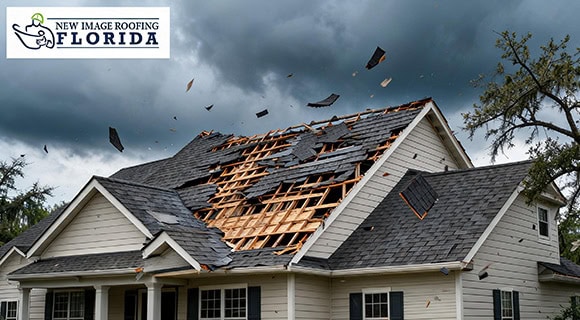
Category 1 storms often appear less threatening than stronger hurricanes, but they can still cause considerable roofing issues. Common damage includes:
- Lifted or missing shingles
- Damaged flashing
- Detached gutters
- Water leaks around roof penetrations
- Minor debris impacts
Homes with older roofing materials are particularly vulnerable during Category 1 storms.
Category 2 Hurricane – 96 to 110 MPH Winds

Category 2 hurricanes produce stronger sustained winds, potentially causing more extensive damage. Homeowners may encounter:
- Significant shingle loss
- Damage to soffits and fascia
- Leaks entering attic spaces
- Broken skylights
- Tree branch impacts
Prompt inspections after these storms are highly recommended.
Category 3 Hurricane – 111 to 129 MPH Winds
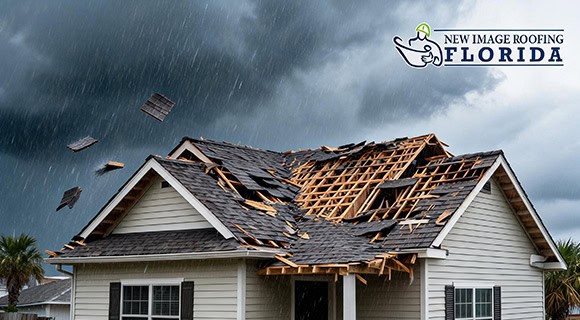
Category 3 hurricanes are classified as major storms. Roofing systems frequently suffer:
- Large areas of missing shingles
- Exposed roof decking
- Structural roof damage
- Severe water intrusion
- Extensive debris impacts
At this level, professional inspections become essential for identifying hidden damage.
Category 4 Hurricane – 130 to 156 MPH Winds
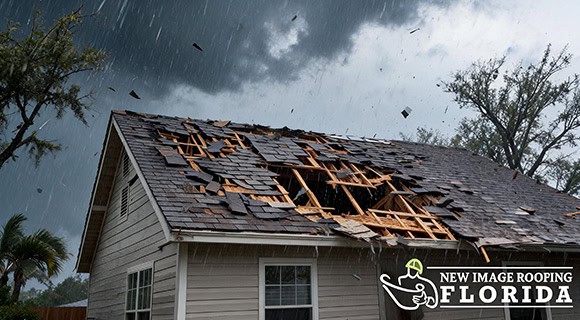
Category 4 storms create severe destruction. Roofing damage often includes:
- Partial roof collapse
- Detached roof sections
- Major water infiltration
- Structural framing damage
- Extensive interior property damage
Emergency tarping services are often necessary immediately following these storms.
Category 5 Hurricane – 157+ MPH Winds

Category 5 hurricanes produce catastrophic damage. Potential impacts include:
- Complete roof failure
- Structural collapse
- Extensive flooding
- Severe interior destruction
- Long-term rebuilding requirements
Recovery from Category 5 storms often requires substantial reconstruction efforts.
Additional Hurricane Damage Beyond Roofing
While roofing systems receive much attention, hurricanes can affect nearly every part of a property. Common damage includes:
- Broken windows
- Damaged siding
- Flooded interiors
- Destroyed fences
- Damaged garages
- Fallen trees
- HVAC system damage
- Electrical issues
- Mold development
Comprehensive inspections help identify all affected areas after a storm.
Filing a Successful Insurance Claim After Hurricane Damage
Homeowners can improve claim outcomes by following several important steps.
Prioritize Safety
Wait until local authorities confirm conditions are safe before inspecting your property.
Document Everything
Take photographs and videos showing:
- Roof damage
- Interior leaks
- Fallen trees
- Damaged personal property
- Exterior structural damage
Detailed documentation provides valuable evidence during claim reviews.
Prevent Additional Damage
Insurance policies often require homeowners to take reasonable steps to limit further losses. Emergency tarping helps satisfy this requirement while protecting property.
Contact Your Insurance Carrier
Report damage promptly and provide documentation as soon as possible.
Schedule Professional Inspections
Professional roofing inspections identify storm-related damage that may not be visible from ground level.
Maintain Records
Keep copies of:
- Inspection reports
- Repair estimates
- Photographs
- Insurance correspondence
- Receipts for emergency repairs
Organized documentation can help support claim approval.
New Image Roofing Florida Emergency Tarping Services

After a hurricane, every hour matters. Water intrusion can continue causing damage long after wind conditions improve. New Image Roofing Florida provides emergency tarping services designed to quickly secure vulnerable areas.
Emergency tarps help:
- Reduce water intrusion
- Protect insulation
- Preserve drywall
- Limit mold growth
- Prevent additional structural deterioration
These temporary measures provide valuable protection while insurance inspections and claim processing move forward.
New Image Roofing Florida Roof Maintenance Contract
Preventive maintenance remains one of the best investments homeowners can make before hurricane season arrives. New Image Roofing Florida offers roof maintenance programs designed to identify potential problems before severe weather exposes weaknesses.
A maintenance contract may include:
- Scheduled roof inspections
- Flashing evaluations
- Sealant inspections
- Gutter cleaning recommendations
- Minor repair identification
- Storm preparedness assessments
- Detailed condition reports
Professional roofing inspections help identify hidden storm damage that homeowners may overlook. Inspection reports often strengthen insurance claims and help establish a clear scope for repair.
Routine maintenance helps extend roof lifespan while reducing risk during hurricane season. Identifying loose materials, deteriorated flashing, or vulnerable areas before a storm can prevent costly repairs later.
Property owners who participate in ongoing maintenance programs often experience fewer storm-related issues because small problems are corrected before they become major failures.
Hire New Image Roofing Florida – 352-316-6008
When hurricane damage occurs, experience matters. New Image Roofing Florida provides professional roofing services for Florida homeowners. Whether you need emergency tarping, storm damage inspections, roof repairs, or complete roof replacement services, the team is prepared to help.
New Image Roofing Florida understands the challenges of hurricane recovery (and works with homeowners throughout inspection, documentation, repair, and restoration processes). Fast response times, professional workmanship, and commitment to customer satisfaction make New Image Roofing Florida a trusted choice for storm-related roofing needs.
State and Federal Emergency Resources
Access to emergency support can make a critical difference during and after a hurricane. Several organizations provide assistance for evacuation, shelter, and recovery.
Federal Emergency Management Agency – FEMA
Emergency Assistance: 1-800-621-3362
FEMA provides disaster relief, temporary housing assistance, and financial support for repairs.
American Red Cross (North & Central Florida)
Emergency Assistance: 1-800-733-2767
Offers shelter, food, and emergency supplies during disasters.
• Visit this link for the Red Cross in Southern Florida
• Follow the American Red Cross on Facebook

Florida Division of Emergency Management
Emergency Information Line: 850-815-4000
Provides statewide updates, evacuation guidance, and recovery resources.
Florida 511 Travel Information System
Dial 511 for real-time road conditions and evacuation routes.
Provides official storm tracking and forecasts to help residents stay informed.
Hurricanes and Roof Damage
Understanding hurricane categories and corresponding roof damage risks helps homeowners prepare for severe weather, protect property, recognize warning signs, document storm damage, and navigate insurance claims more effectively. Readers learned how each hurricane category can affect roofing systems, what additional property damage may occur, and steps necessary for successful recovery after a storm.
Homeowners who invest in preventive maintenance, schedule regular inspections, document damage, and utilize emergency tarping services when necessary are often able to minimize losses and restore their homes more efficiently. Taking proactive measures before hurricane season can provide peace of mind and stronger protection when severe weather arrives.
Ignoring maintenance needs, delaying inspections, or failing to address storm damage can lead to worsening leaks, structural deterioration, mold growth, denied claim complications, and significantly higher repair costs. Preparing today can make a substantial difference when the next hurricane threatens your home.
Wildwood, FL 34785
(352) 316-6008
Schedule your free roof inspection
Free inspections and estimates — we’ll be in touch within 24 hours.